

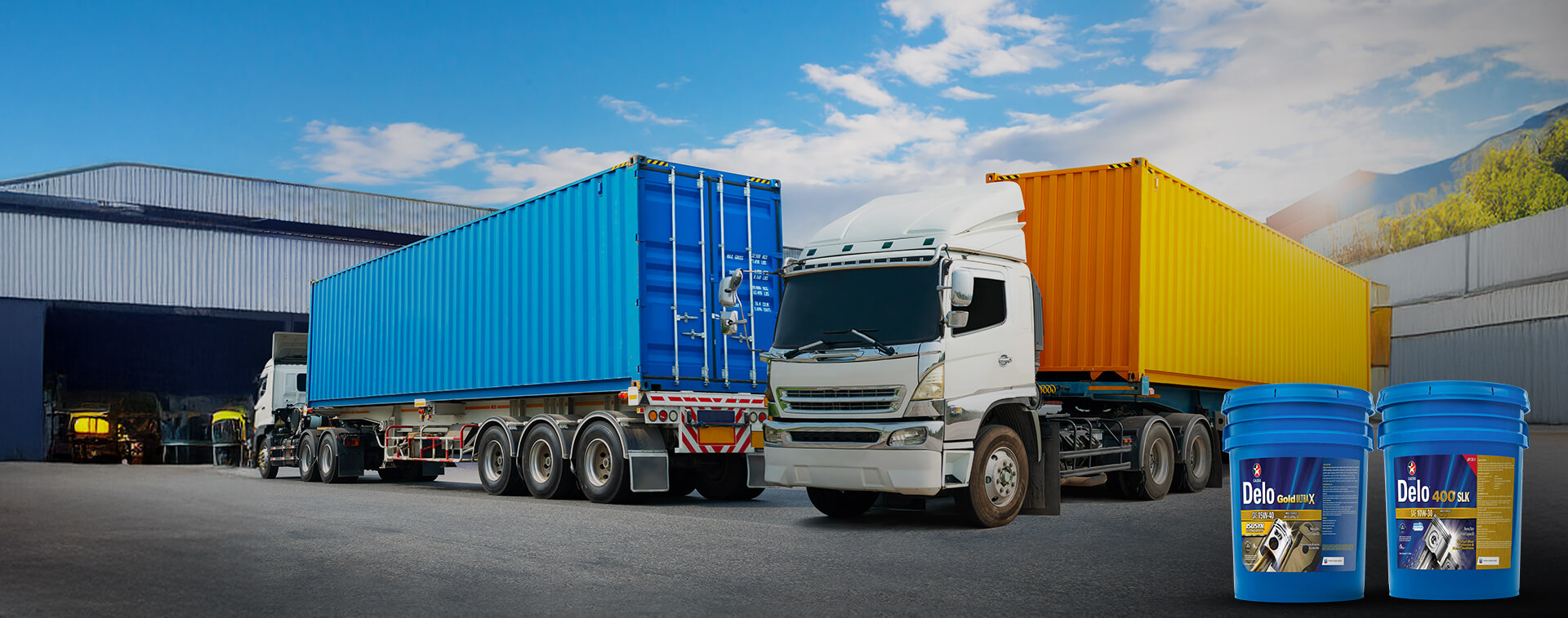
Heavy-Duty Motor Oil (HDMO) Guide: Here’s How You Can Choose the Right One
Published by: Chevron Technology | 23-Jan-2026
With great power comes great responsibility – and that perfectly sums up the importance of heavy-duty motor oils (HDMO) in running commercial vehicles and industrial machinery. The heavy-duty engine oils should have formulations and properties to handle the extreme operating conditions of such engines. However, like regular engine oils for smaller vehicles, not every HDMO is compatible for use as a universal solution.
Here, we will be analysing the various aspects of HDMO and how their suitability differs for different types and specifications of machinery.
Understanding Heavy-Duty Engine Requirements
Heavy-duty engines are designed and engineered according to the guidelines in their fields of extensive work, such as transportation, mining, construction and agriculture. Since such engines operate in challenging conditions, including long hours of operation, high stress and varying climatic conditions, HDMO for them should meet the following conditions:
- Excellent wear protection, high thermal stability, and capability to prevent sludge formation
- Excellent oxidation resistance to combat challenges like high compression pressures and accelerated oil breakdown in modern heavy-duty engines
- Low SAPS (Sulphated Ash, Phosphorus and Sulphur) content for low ash buildup in Exhaust Gas Re-circulation (EGR), Diesel Particulate Filter (DPF) and Selective Catalytic Reduction (SCR) systems used in modern diesel engines complying Bharat VI emission regulations.
- Optimum Total Base Number (TBN) for more effectiveness in controlling acid formation and soots, especially for low-quality fuel (high sulfur diesel)
Types of Heavy-Duty Motor Oils (HDMO)
Like regular engine oils for two-wheelers, heavy-duty engine oils for industrial applications and commercial vehicles are also classified into three categories:
Conventional HDMO
Conventional HDMO is generally classified as mineral-based engine oil, which is often a cost-effective option for fleet operations. Mineral-based engine oils are available in various viscosity grades and performance levels, tailored to specific application needs. Despite being mineral based, these oils can meet the latest industry and OEM specifications, depending on the quality of the base oil and additives used. As a result, they have the potential to deliver the required performance for day-to-day operations.
Synthetic Blend HDMO
These semi-synthetic heavy-duty motor oils are composed of a blend of mineral base oil and synthetic oil. The incorporation of synthetic molecules enhances performance in both high and low temperature environments and improves oxidation resistance. Synthetic blend engine oil offers an intermediate solution for vehicle owners seeking superior protection compared to conventional mineral-based oils without incurring the cost associated with fully synthetic products.
Fully Synthetic HDMO
Manufactured from high-purity base oils and advanced additive systems, these heavy-duty engine oils are formulated to meet the demands of modern engines and comply with OEM standards. They are particularly well-suited for contemporary heavy-duty diesel engines, including vehicles fitted with after-treatment technologies such as DPF, EGR, and SCR systems. Fully synthetic engine oils are engineered to perform reliably under extreme climatic conditions, offering extended drain intervals, enhanced soot control, reduced wear, and improved fuel efficiency with lower viscosity grades. It should be noted, however, that their initial purchase cost is higher than other alternatives.
Key Factors to Consider When Choosing Heavy-Duty Engine Oil
Multiple operational factors align to make an HDMO suitable for a particular heavy-duty diesel engine, avoiding any of which can cause gradual engine damage. The following are those factors:
OEM guidelines
An engine oil must match the guidelines recommended by the original equipment manufacturer (OEM), which mentions viscosity grades, performance standards, drain intervals and emission system requirements. Failing to comply with OEM guidelines can void the engine's warranty and result in component damage.
Viscosity
Modern-day heavy-duty engine oils require different viscosities for different conditions. Some of the commonly preferred viscosities for HDMOs are SAE 5W-30 and SAE 5W-40 for cold climates, SAE 10W-30 for better fuel efficiency and SAE 15W-40 for all-around performance.
Operating Conditions
The preference of HDMO also depends on the extent of the engine, and by that, we mean the working hours and intensity or frequency of the usage of engine. While HDMOs with better wear and oxidation resistance are suitable for high-speed and high-load engines. Operating in high sulphur fuel environment will require higher base number engine oil to counter the higher acid formations inside engine combustion chamber.
Compatibility with Emission Systems
Since the BS-VI emission norms came into effect, diesel engines for commercial vehicles feature a diesel particulate filter (DPF), exhaust gas recirculation (EGR) and selective catalytic reduction (SCR). These more advanced systems and components are used to keep pollutants in check. Such sophisticated emission systems require engine oils with low SAPS content.
Type of Oil
As previously stated, choosing between conventional, synthetic blend, or fully synthetic engine oil depends on factors such as the oil's performance rating, the viscosity grades offered by each type, and the initial cost to the owner.
Performance Standards
Modern engine oils with performance ratings from international organisations like API (American Petroleum Institute), ACEA (European Automobile Manufacturers Association), ISO (International Organisation for Standardisation), JASO (Japanese Automotive Standards Organisation) and BIS (Bureau of Indian Standards) ensure their authenticity, durability and compliance with the latest standards.
Drain Intervals
Using heavy duty engine oil with extended drain intervals can lower operational costs and reduce vehicle downtime, but it requires choosing high-quality oil and closely monitoring oil condition to maintain engine health.
Formulate with balance additive system
Modern HDMOs also feature additives such as detergents for neutralising and cleaning, dispersants to prevent large soot formation, anti-wear agents to protect engine metallic components for reliable operation and antioxidants to slow down oxidation due to high temperature in engine.
Why Choose Caltex Delo for Heavy-Duty Engines?
Caltex Delo stands as the benchmark for Heavy-Duty Motor Oils (HDMOs), consistently outperforming conventional formulations and meeting the stringent demands of next-generation engines. Recognized across industries for its unmatched reliability, Delo is engineered for diverse and extreme operating conditions, making it the preferred choice for fleets and operators who refuse to compromise on performance.
Caltex Delo’s leadership is built on proven technology, superior engine protection, and a legacy of delivering measurable results. Here’s what sets it apart:
Proven Durability
Caltex Delo features ISOSYN and ISOSYN advanced technology, which is a blend of advanced base oils and premium additives. Formulated using this technology, the Caltex HDMO claims excellent wear protection under heavy loads, reduces sludge deposits and oxidation, increases drain intervals and keeps the engine running clean, thereby improving its long-term durability.
Compliance with OEM Specifications
An engine oil’s first testament to quality is how it meets OEM specifications, and Caltex Demo does that with its various certifications, including API (CK-4, CJ-4 and CI-4 Plus) and ACEA (E11, E8, E7 and E4).
Suitability for Modern BS-VI engines
Caltex Delo has a low SAPS (sulphated ash, phosphorus and sulphur) formulation that is meets industry specifications that compatible for modern BS-VI diesel vehicles equipped with after treatment devices such as DPF, EGR and SCR.
Conclusion
Not all HDMOs are appropriate for every engine or for different types of commercial vehicles or industrial engines, since each has specific OEM requirements, quality standards, operational conditions, and maintenance schedules. To ensure optimal performance, choose an HDMO that meets relevant certifications and performance criteria, and matches the necessary viscosity grades and environment temperature ranges for your engine.
Investing in Caltex Delo, that meets multiple criteria in this direction, fulfils the ultimate purpose of better performance, durability and fuel efficiency. Explore the full range of Delo heavy-duty engine oils by contacting a distributor near you.
FAQs
What are heavy-duty engine oils?
Heavy-duty engine oils are lubricants formulated for commercial vehicles and industrial engines that operate for long durations and work under heavy loads and in extreme temperatures, while complying with the latest emission standards.
Which engine oil is best for heavy vehicles?
For heavy-duty commercial vehicles, HDMOs with viscosity grades of SAE 5W-30, SAE 5W-40, SAE 10W-30 and SAE 15W-40, and performance standards from organisations such as API, ACEA, ISO, JASO and BIS, are preferable.
This Article is written by Chevron Technologies In Collaboration with Industry Expert